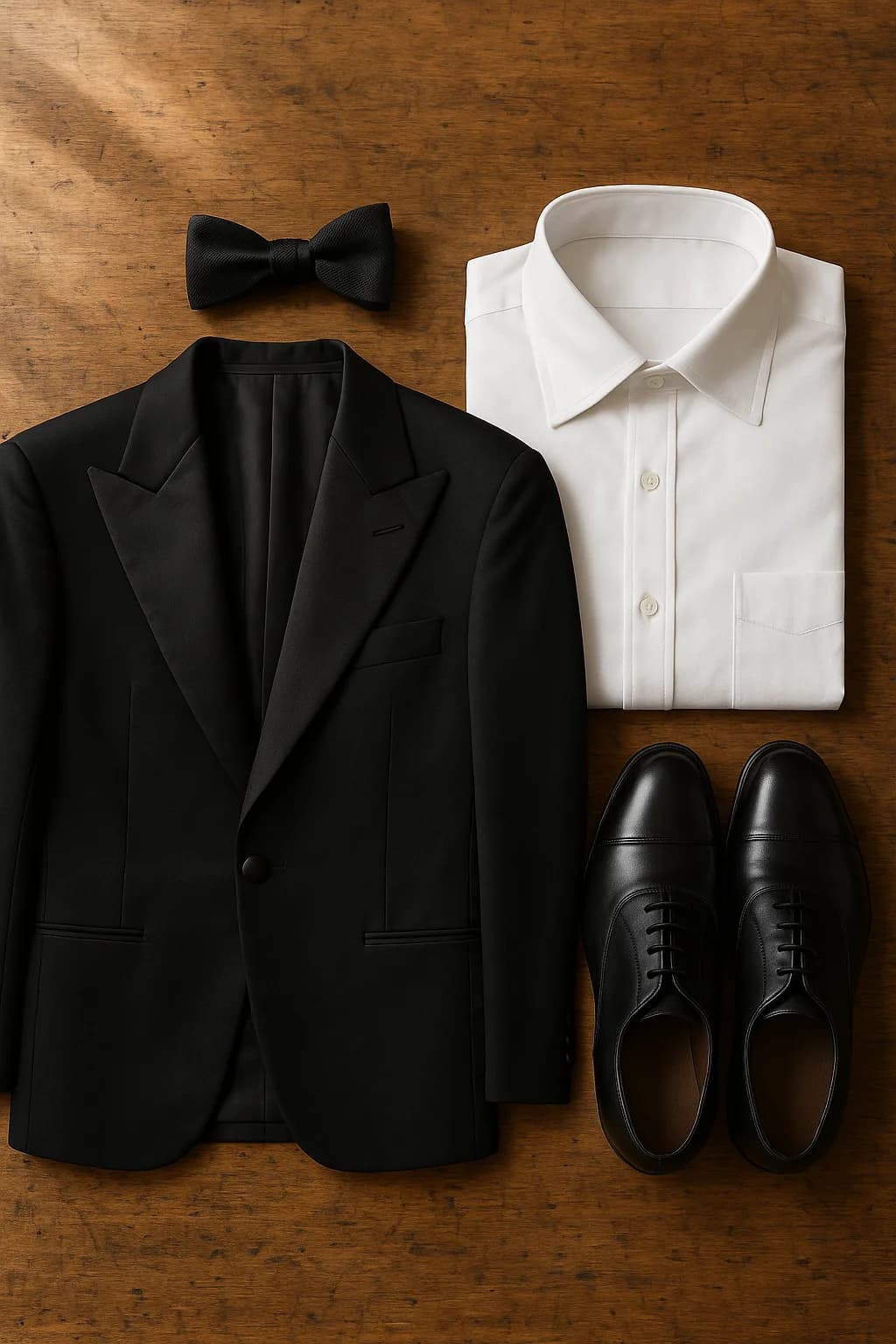
Formality
Not a ladder: a match between the clothes and the room.
Dress for the occasion, the setting and the company, as a matter of respect. Clothes are still a poor measure of character.
In shirts, double cuffs, wider-spread collars and hard-finished cloth are more formal. The button-down oxford is the least formal.
Read all 26 rulesClose the list
A tie goes with a jacket. If the jacket stays off all day, leave the tie off too, because a tie alone looks like a work uniform.
A jacket flatters the body and makes the whole outfit look finished.
Context decides. A loose sweatshirt and worn trainers suit a Sunday walk but not a formal dinner. Know what counts as over and under dressed.
To soften a coat and tie, relax each piece a little: cotton or linen for the jacket, chinos for the trousers, loafers for the shoes.
Small swaps in every part lower the formality without losing the shape.
Ties and pocket squares sit awkwardly with jeans and corduroys. Keep them for blazers and grey flannels.
Texture does the work in the casual outfit.
Offices and business settings call for socks. Bare ankles belong to casual dress.
A tie turns casual with bright or light colour, a matte finish and a bold pattern. Dark colour, shiny silk and a conservative pattern make it formal.
Match the tie to the hour, the season and the setting.
A sweater or sweater vest under a suit makes the outfit a little less formal. Pick a muted grey or navy and a fine, hard-finished knit.
The sweater should contrast with the jacket without shouting.
Dress tailoring down with knitwear, patch pockets, an oxford button-down or polo, or jeans. The nuance sits in the cut and cloth.
Suede is the soft, casual side of leather. Suede shoes or jackets dress tailoring down.
Denim and leather pair well. A textured sweater under a leather jacket works, and minimal shoes keep it relaxed.
Midnight blue is a better evening choice than navy.
Casual basics such as chinos, button-down shirts and v-neck knits turn bland together. A tailored, structured jacket lifts them.
Soft lambskin and thin suede read dressier than stiff cowhide or horsehide, which look rugged.
Formal means serious and sombre. Dressed up means caring how you look, for yourself and for others. Tailoring can serve either.
A plain white tee and good jeans make a steady base. Changing only the jacket and shoes shifts the look from conservative to rugged.
A button-down collar suits sport coats, knit ties and bow ties. With a suit it works best on casual ones in cotton, tweed or corduroy.
A chambray shirt works open over a tee, tucked under a chore coat, or under a cashmere sweater with an odd jacket.
A casual field shirt can be worn with a suit or sport coat for a dressed-down look.
Cream in a sport coat is quieter and less formal than a white dinner jacket, and serves day or evening.
Smooth, refined leather jackets can be worn with grey flannel trousers.
Older rules of time and place still colour taste: shiny wool-mohair reads as evening, lumpy brown tweed as afternoon.
Cotton, linen or mohair-blend suits suit relaxed occasions: too casual for an office and too formal for everyday.
Tailored clothes give casual ones their meaning. A t-shirt feels relaxed after a jacket comes off, but loses that feeling worn all day.
Smooth white dress shirts are city shirts, best with suits and ties, and far less useful with jeans or sport coats.