Buying well
What to look at before you pay.
Judge a garment as you would furniture: will it look right and hold up after ten, fifteen or fifty years? Quality bought once costs less over time.
Pieces built for one season are soon forgotten.
Read all 39 rulesClose the list
Handle and try on clothes in person. Photographs hide how a cloth feels, and fit stays unknown until the garment is on.
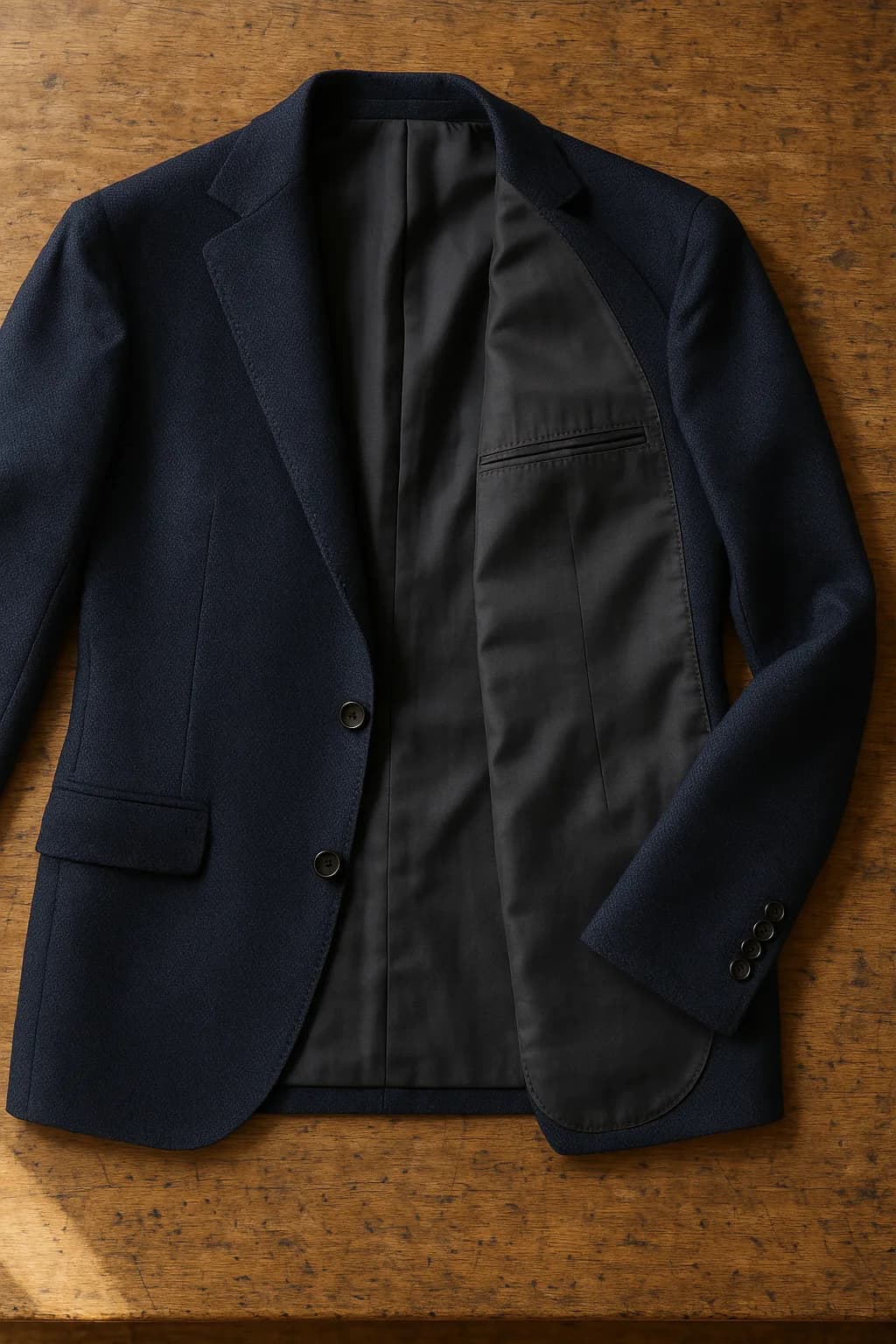
Find out how a jacket front is built. Canvas drapes better and costs more; fused interlining is cheaper, stiffer and tends to degrade with time.
A seller who cannot answer probably cannot advise on quality either.
Trying on pieces beyond your budget or taste trains the eye. Good cloth and cut show only by comparison, and close study exposes careless work.
When ordering custom, judge concrete services, such as whether the maker can handle uneven shoulders or a hunched back, over titles such as bespoke or made to measure.
Check that the person who cuts the garment attends the fittings. A salesperson alone may not know how to correct fit.
Stay within a tailor's own house style, build a lasting relationship and improve over later orders rather than over-managing one commission.
The result is more likely to please.
When ordering cloth for a custom garment, buy a little more than the tailor's bare minimum, in case something goes wrong in cutting.
Begin a tailored wardrobe with basics and keep to them longer than feels exciting, so each new piece works with the rest.
Choose pieces that serve several purposes, such as shoes for work and weekends and shirts that dress up or down.
Buy a pale jacket only when two or more pairs of trousers will suit it. Otherwise jacket and trousers effectively become a suit.
One pair alone makes a set, not a separate.
Spend on the outer layer and knitwear, which people see first, and economise on tees and shirts beneath.
The outermost layer carries the outfit.
If fine cloth is out of budget, buy things that look better worn in, such as sweatshirts, denim and sturdy boots.
Wear improves them, where it spoils delicate pieces.
When money is tight, economise on a tie before shoes. The gap can be full-grain against corrected-grain leather.
Shoes show wear and can be rebuilt.
A tailored jacket does not fit well in small, medium and large. Numbered chest sizes in short, regular and long exist for a reason.
Fit is the first concern in tailoring.
Test a new tailor or cleaner on a garment you can afford to lose, then judge the work after two or three weeks of wear.
First impressions flatter. Flaws in the finish show only with wear.
Add the cost of a rebuild to the price of worn second-hand shoes. Gouged or crazed leather cannot be repaired, so leave those pairs.
Shirt sleeves shorten easily but rarely lengthen. The shoulders and chest are largely fixed, so they need to fit as bought.
A tailor can usually adjust a jacket waist and torso by about two inches, though one inch is safer. Work above the armholes is very hard.
The shoulders need to fit as bought.
Check how much a tee shrinks in chest and length before choosing a size, since slim cuts may need sizing up.
When buying a vintage flannel, prefer natural fibres and period details like cat-eye buttons, and hold it to the light for flaws.
Classic overcoats and old workwear jackets last for decades, so good second-hand ones are worth looking for.
Pinch the jacket front just under the lowest button and pull the outer layers apart. A loose, separate layer between them marks full canvas.
A chest piece sits in every jacket, so a layer felt there proves nothing.
A shirt has no inlays, so weight gain or loss means rebuilding the shirt collection.
Best value depends on the body, taste, how often the piece is worn and what the buyer prioritises, so quality per pound is never the whole question.
Judge a tailor on the quality of the work, not on whether the shop looks old and serious.
With ready-made clothes the exact item can be inspected before paying, which made to order cannot offer.
A custom order may not turn out as pictured.
Bodies change, so a pattern made for you needs updating. A tailor who sees you regularly adjusts it better than guesswork from afar.
Weight shifts alter the waist.
Not everything needs to be close fitting. Knowing which clothes can be altered lets you build different silhouettes from second hand pieces.
Vintage pieces can be of high quality, and a tailor can alter what is not quite right.
On second-hand trousers, check the hem allowance first. A leg can be tapered, but it can be lengthened only when spare cloth was left.
A good shape in the wrong length is worth buying only when the cloth is there.
Choose a leather jacket by what it will be worn with: rugged cuts for worn jeans and boots, soft conservative ones for tailored trousers.
Casual suede shoes are the place to economise. Suede covers flaws in cheaper hides and still looks decent, where smooth corrected-grain leather looks plasticky.
A famous label on a second-hand piece can mean a licensed, lower-grade line. Judge the cloth and the making, not the name.
Names were once lent to weaker factories, so labels can mislead.
Ready-to-wear is patterned on one fit model, so the further a body is from that model, the more a tailor's adjustment is worth.
Even the right size off the rack may need work.
A leather jacket cut too full can often be taken in by a good alterations tailor.
A cowhide leather jacket insulates heavily, which makes it impractical on warm days.
A well made ready-to-wear piece beats a poorly made custom one. Moving up the custom tiers does not automatically give a better garment.
Judge on fit and styling rather than ideas of luxury.
A made-in label is a weak guide to quality, since makers in every country range from poor to excellent. Learn what makes a good garment instead.
The skill sits in the make, not the flag.