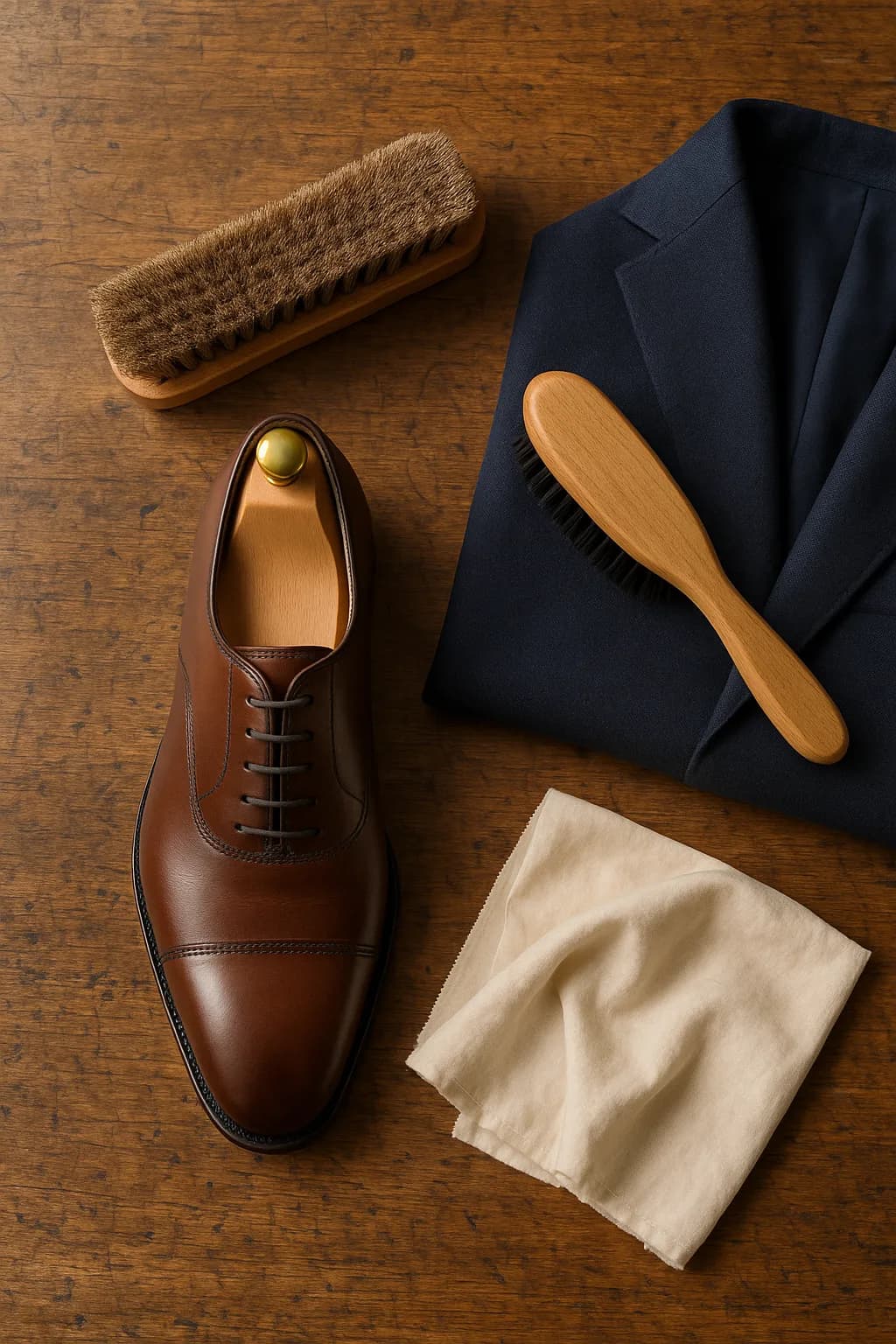
Care
Keeping good things good.
Care in everyday habits, such as ironing and laundering properly even when unseen, is part of dressing well.
Keep wearing the oldest things you own. Worn in clothes gain patina and personal meaning.
Read all 29 rulesClose the list
Before buying, picture how the surface will age. Wear marks suit rugged workwear, but a fresh stain on suede hurts more on a dressier piece.
Pilling comes from friction, as on elbows. Wash a sweater rarely, once it is dirty, and keep it from rubbing on surfaces.
Longer fibres pill less, but all wool pills.
White tees yellow with washing, sweat and soil whatever the care, so treat them as replaceable. Washing soon after wearing slows it.
Expect a season of life, not a decade.
Cream polish carries pigment and nourishment, giving soft colour and depth with a matte finish. Wax protects and builds gloss but does not feed the leather.
Choose by the finish wanted.
Choose a cleaner that works on site and presses by hand for good suits. Machine pressing can send rolled lapels back flat.
Good cleaning is never cheap. A very low price with a quick turnaround is a warning.
Collars and cuffs fray first because they take the most wear. A tailor can turn them, which works best on double cuffs.
The inside faces are less worn, and cloth from the tail can replace one side.
Hang a tie after wearing so its lining relaxes, and never store it knotted, which warps the blade and sets creases.
Hand-wash fine cashmere only when it needs it, roughly once a year. Patch worn elbows and have snags rewoven instead of discarding the sweater.
Gentle care lets good knitwear soften and last for decades.
Take shoes for a new heel or sole before the bottom layer has worn through. Heels and soles are replaceable on good shoes.
Wool jackets lose wrinkles if left hanging for a few days. A little creasing does not spoil a tailored jacket, whose silhouette matters more.
Shearling needs a specialist cleaner. When wet, dry it in a ventilated room away from direct heat, then brush with the grain.
Humidity distorts a pressed jacket edge, so avoid steaming a suit or hanging it in a steamy bathroom.
Strong steam can pucker seams and strip shaping from tailored clothes. An ordinary iron and a spray of water usually do enough.
Water-repellent sprays lift the fibres so droplets roll off, but dirt flattens them, so the treatment needs repeating.
Hand made artisanal textiles may pucker or fade unevenly because of uneven shrinkage and dyes that are not colourfast. Dry clean them or wash gently by hand.
Never cut a snag in knitwear. Pull it through to the back with a needle so the thread stays intact and the damage disappears.
A cut snag can turn into a hole over time.
Natural dyes fade and bleed in the wash. That is their character, not a defect.
Weatherproofing makes a pair of shoes water resistant, not waterproof, so avoid puddles even after treating them.
Dry clean suits and coats no more than about once a season, since few cleaners treat tailoring with care.
Careful cleaners are hard to find.
Suede picks up dirt and can go bald or shiny where the nap flattens. Dark colours hide stains better.
Unstructured cotton suits, with no padding or canvas, can be machine washed and left to drip dry.
Iron shirts while they are still a little damp and they smooth quickly. A decent iron and board bring one shirt down to about three minutes.
Weekly ironing then takes little time.
Cut pills off a sweater with a shaver set to cut, not pull. Pulling them off with fingers or a stone can damage the knit.
Cutting leaves the yarn intact.
Hang trousers upside down by the cuffs and their own weight pulls out creases. A felt-lined clamp hanger does this best.
Handy in a hotel overnight.
A hole or tear in tailored cloth can be reweaved. Fine threads fill a small hole, and a woven-in patch covers a larger one.
Any mend shows on close inspection.
Too much wax cracks, leaves white residue and seals leather so it dries out. Keep it off flex points and wipe the shoes with a cleaner yearly.
Cream alone avoids the problem on casual shoes.
Use a shoe horn so the heel counter does not collapse. Repairing it is expensive.
A few seconds saves the shoe.