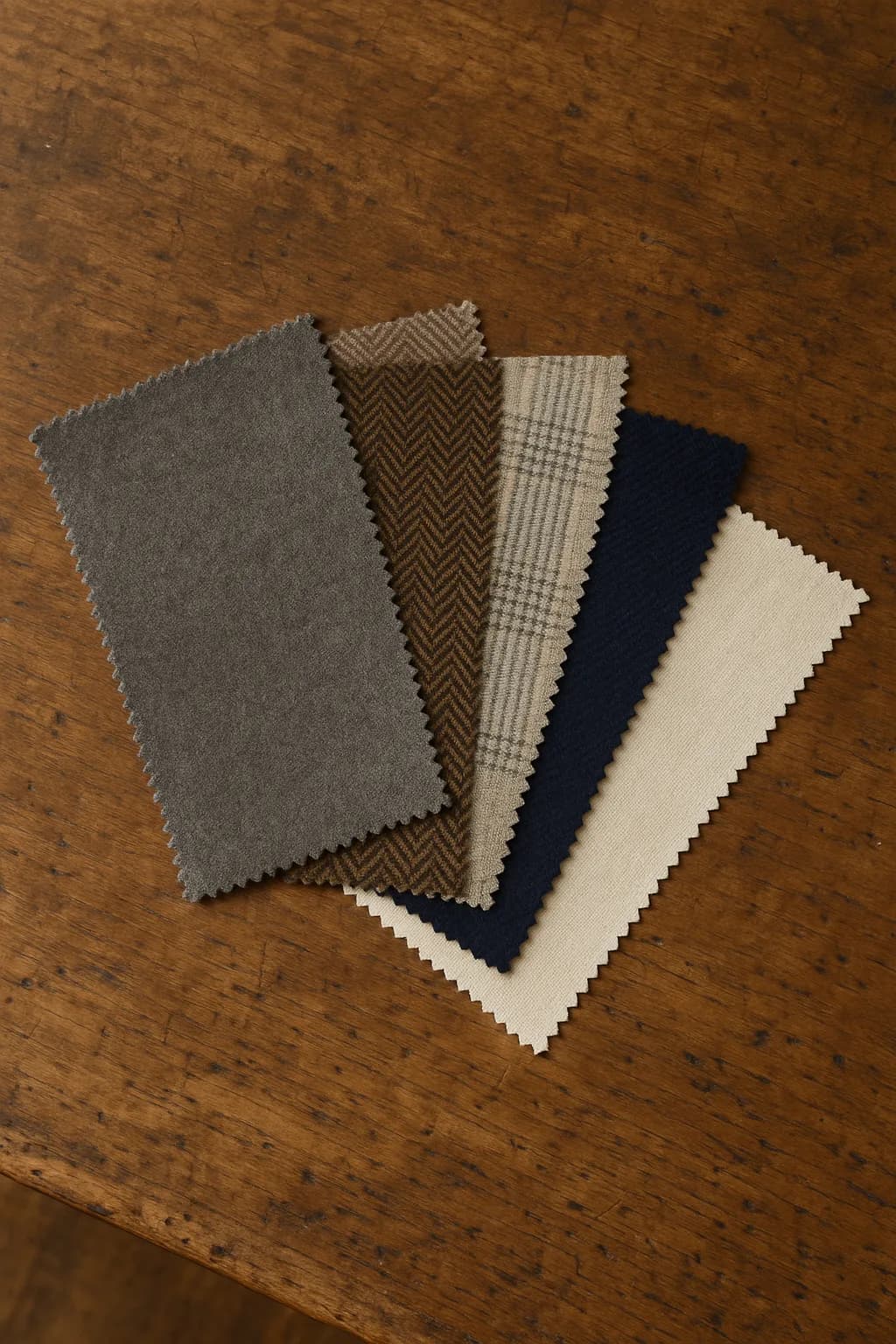
Cloth and season
Weight, weave and fibre, in that order.
For interest without loud colour or pattern, use texture: rough knits, worn denim, suede, flannel, tweed, or nubbier shirts and cords at the office.
Texture adds interest without the work of coordinating patterns.
Read all 63 rulesClose the list
The seasonal formula is to keep the outfit's shape and change the cloth: heavier shirts, textured ties and rougher jackets replace linen and light cotton.
Tropical wool is open in weave and high in twist, so it lets heat out and springs back from creasing.
In a pale or all black outfit, make depth from texture, pattern and lustre. Wool, linen and cotton in one colour catch light differently.
Keeping the textures of an outfit in agreement is the safe route. Texture also means visual weight, not only weave or fibre.
For spring, brighten the usual colours: navy toward a lighter French blue, dark brown toward dusty tan.
Let the season guide colour. Light, bright shades suit spring and summer; clay brown, moss green and burnt ochre suit autumn, echoing the colours outdoors.
Moleskin is hardwearing brushed cotton with a velvety hand like corduroy, but without wales. It suits autumn colours.
A quieter alternative to cord.
Cotton with long fibres has fewer joins, so it feels smoother and stronger, and takes colour more clearly without harsh bleaching.
Long staple cotton wears well.
Heavier cloth holds its shape and hangs better in jackets and trousers. Try on the weightiest pieces a clothier stocks.
For one pair of wool trousers worn all year, choose pure wool of medium weight, around ten to eleven ounces, in a weave neither very open nor dense.
Open tropical weaves leave the wearer cold for half the year.
A mesh-like open-weave shirt is too casual for a tie and belongs with very casual dress.
A coarse, sturdy shirt cloth handles summer sweat and grime better than a fine one.
It stays presentable instead of limp by evening.
Worsted cloths wear cooler than woollens such as tweed, so they suit spring and summer.
For early autumn, swap summer cloths for ribbed corduroy, mid-weight tweed or worsted. Keep the heaviest tweeds for real cold.
Light unlined cotton outerwear stops wind without trapping heat, which suits the in-between months.
Cotton and linen tailoring behaves better above about twelve ounces, because heavy cloth falls into soft rumples rather than sharp creases.
Dark cotton fades unevenly and shows its age early. A light cotton suit holds up better.
Wool gabardine is too smooth for an odd jacket. Wear it as a full suit; its trousers are fine alone.
Tweed is rough against bare skin. A thick shirt such as oxford cloth or brushed flannel sits best under it.
A worsted tweed-look jacket sits well with silk ties and heavier flannel trousers.
Tweed jackets suit flannel, corduroy, moleskin, whipcord or cavalry twill trousers, and relax further over jeans and a sweater.
A textured summer jacket pairs well with tan, cream or dark grey trousers.
Linen creases easily, so a linen jacket needs careful trousers, in colour, pattern, texture and sheen. Choose crisp, dry-feeling cloth to agree with it.
Worsted wool is combed so the fibres lie parallel, which gives a smoother, crisper cloth. Woollen cloth skips the combing and feels loftier and spongier.
Combing removes short fibres and aligns the rest.
A dense twill from tightly spun yarn is hardwearing and resists snags, which is why it was made for rough country outer layers.
The flecks in Donegal style cloth are felted wool scraps that cannot stretch, so they sit on the yarn as irregular lumps that give an earthy surface.
A true shepherd's check is a plain black and white pattern close to gingham. Houndstooth began as a variant of it.
Bridle leather is the sleekest saddlery leather, with a waxy bloom, and the hardest wearing of the dress leathers.
Raw saddle leather holds little oil or wax, so it is dry, stiff and prone to water marks. Semi-aniline leather resists water and stains better than full aniline.
A very open weave is sheer enough to show what is behind it, so many men need an undershirt, which cancels the benefit.
Rayon drapes well and feels cool, but it needs hand washing, not the machine or a hot iron. Let the wrinkles hang out.
The fibre is soft, smooth and insulates poorly.
Denim is a twill, so a real denim shirt shows diagonal ridges. Chambray has a flat, plain weave.
Shops often use the two words as if they meant the same thing.
Chambray is a light, breathable plain weave of white and coloured yarns, so it comes cooler than denim twill and suits summer work shirts.
The open weave lets air through.
Flannel varies in weight. A thin flannel gives the look with little warmth, while a heavy brushed one insulates and blocks wind.
Good flannel has texture and depth: a slubby, loose weave, coarse yarns, mottled colour and visible threads.
In heat, weight and weave matter more than fibre. An eight-ounce tropical wool breathes better than a fourteen-ounce cotton twill.
Smooth, tightly woven worsted in a country check sits between summer cloth and true tweed in warmth.
Tweed is a cold-season cloth, hard-wearing and earthy in colour. A classic tweed jacket can last a lifetime.
Sporting tweeds are denser and tougher than soft, spongy ones such as Shetland.
Wool gabardine is a close twill that drapes, stretches and resists wrinkles. It is a spring and autumn cloth.
Fresco is an open, high-twist worsted that breathes and resists creasing. Its slightly rough hand suits separates.
Covert cloth is a sturdy, flecked twill. Its mottled colour hides small marks and works in town or country.
Linen differs by origin: British is stiffer, Italian softer, Belgian in between.
Very light cloths lose texture. Make up for it with a deep twill or a fine tone-on-tone check.
Mock leno is an open weave with strong texture, made for sport coats.
A wool jacket in a fine herringbone with no sheen looks richer than a similar one in polyester.
Lightweight wool wicks sweat to the surface to evaporate, where cotton holds it and wrinkles more.
Cotton absorbs sweat, which cuts air exchange.
Loden is a dense, slightly hairy wool, warm for its thickness and fairly water resistant thanks to its natural oils.
Basket weaves such as oxford and pinpoint are richer in texture but snag more easily than plain weave, which is durable and resists wrinkling.
Twill shirting is the most durable and resists soiling, though stains are harder to remove from it.
Plain weaves are usually more breathable than twills in a summer shirt, though some plain weaves are tight and some loose.
An open, airy knit or lace shirt worn over a tee is the easier way into see-through summer tops.
Judge seasonal cloth by weight, colour and pattern, not the calendar. A heavy linen in a tweed-like check can run into October.
A little wool, cashmere or stretch, around two percent, softens cotton so it drapes and moves better.
Silk blended into linen reduces wrinkling. A little silk in wool-linen adds mild sheen and strength to open weaves.
Cotton suits are stiff, crumple and fade, so they age like denim. They suit mild spring and autumn better than scorching heat.
The cotton suit is the most casual suit. Its jacket works alone with chinos or jeans.
A wool-mohair blend gives a summer suit light weight, a slight sheen and a sharp crease.
Rough, fuzzy cloth can look out of place at work. A smooth worsted with a dry feel suits offices and warm climates better.
Summer jackets are often plain, because the jacket spends much of the day off the shoulders.
If tweed itches, choose a smoother worsted or cashmere blend woven in a tweed design.
Warm-weather suits can keep winter texture and pattern if they use airy cloth such as slubby silk-linen or patterned fresco.